

Initial Inspection
Tiles are susceptible to accumulating dust, oils, and soap residues, among many others, which can affect their appearance in the long run. Although sweeping and mopping ensure that the tiles are kept clean from any dirt, they do not necessarily clean the grout and textures. Knowledge of the different stages in professional tile cleaning, and what the service providers like Citrus Fresh Residential Tile Cleaning in Atlanta offer, is essential in understanding how different methods contribute to getting rid of dirt build-up.
In most cases, the entire process starts by examining the surface of the tiles. The process of examination involves identifying the type of tile, the condition of the grout, and any existing stains, cracks, and loose tiles. There are different types of tiles that are made of other materials such as porcelain and ceramics, which behave differently from the rest. This is crucial since it determines how to clean them.
Pre-Treatment Application
After the surface inspection, one can use a proper cleaning solution in order to help break down the built-up dirt and residues. This step is called pre-treatment. It depends on the kind of tiles, the type of dirt and the state of the grout in order to choose a suitable cleaning solution. The pre-treatment process helps the cleaner to work together with the dirt before starting the actual process of cleaning. Since grease, soap and mineral deposits have different chemical properties, different solutions will be needed to clean them. In most cases, the solution remains on the surface for some time.
Agitation and Scrubbing
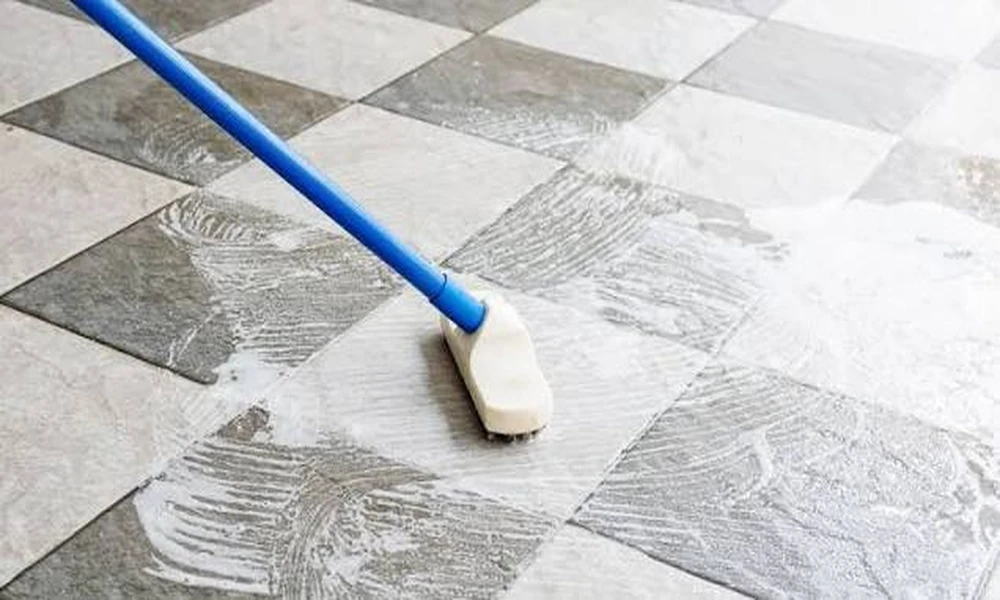
After treating the tiles, agitation will assist in the removal of dirt which has been loosened through the process. This is done by use of brushes or scrubbers or even mechanized devices depending on the type of tiles, dirt, and condition of the grout. The grout will have to be treated with more care than other areas because of its porous nature, which allows for the settlement of soil and dirt in the grout. Textured tiles will also have some dirt hidden in the grooves, and scrubbing will help dislodge them. But this does not mean that scrubbing should be used on all kinds of surfaces; natural stones and other polished finishes are susceptible to wear by abrasive materials.
High-Pressure Extraction
High-pressure extraction can then be carried out after agitation to eliminate the loosened dirt, cleaning solution, and residues. The use of specialist equipment allows the passage of water on the tiles while collecting the resultant wastewater. It is important to note that the pressure and temperature of the water should be right for the type of flooring and the installation.
Overly high pressure may lead to deterioration of the weak grout, injection of the water into weak joints, or poor installation of the tiles. Extraction involves moisture control and elimination of as much wastewater as possible. Drying of the surface might be necessary after the cleaning process. Proper drying reduces the chances of slipping and avoids exposing the surface to excess moisture.
Optional Grout Sealant
However, after adequate cleaning and appropriate drying of the tile and grout, grouting sealing can be considered. Sealants form a protective coating that reduces the capacity of some liquids to penetrate the grout and makes maintenance easy. But no sealant will ever make grout stain-resistant.
The use of a sealant will be dependent on the type of grout and the environment in which it is used. Certain tiles, especially the natural stones, might require a specific type of sealant. Using a sealant on an untreated surface will have some impact on its effectiveness.
On the whole, the cleaning of tiles entails various stages, which include inspection, pre-treatment, scrubbing, extraction, and protective sealing where necessary. Each process will play a distinct role in ensuring effective removal of accumulated soil from the flooring. The processes give an insight into residential tile maintenance and the services provided by Citrus Fresh Residential Tile Cleaning in Atlanta.
