

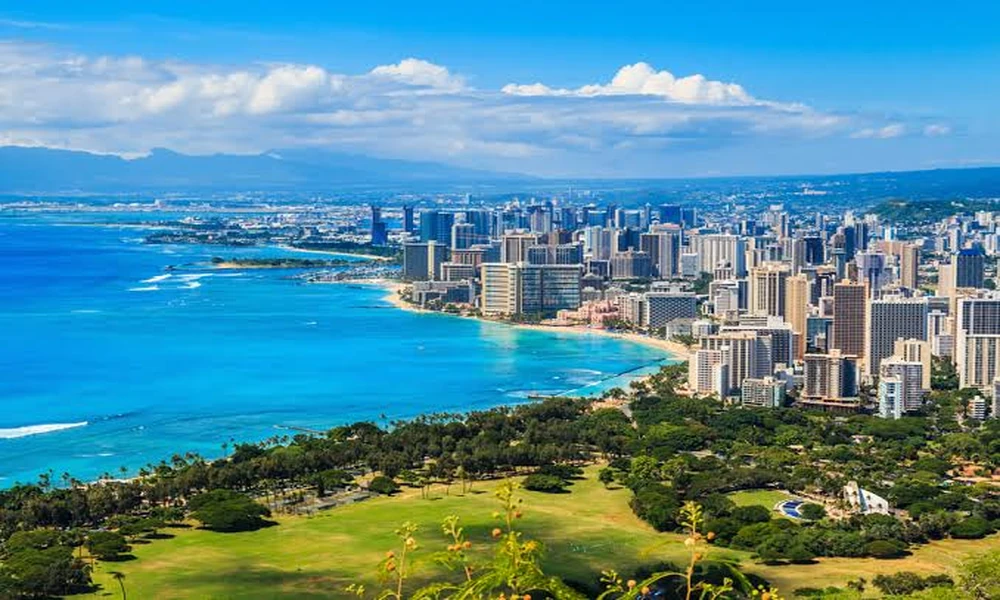
Most people assume Honolulu tops livability lists because of the beaches. They’re wrong, or at least only partly right. The beaches are a bonus. What actually makes this city work is a rare combination of infrastructure, cultural depth, outdoor access, and a pace of life that other American cities spend billions trying to manufacture and still can’t quite nail.
If you’ve ever seriously considered relocating to Honolulu, or you’re already here and want to understand why it feels different from other places, this breakdown covers the real reasons the city keeps pulling in top rankings, year after year.
The Rankings Are Not Hype
Skeptics roll their eyes at “most livable city” lists, and fair enough. Most of them are ad-driven nonsense. But a few carry real weight, and Honolulu shows up at the top of those.
According to the Economist Intelligence Unit’s Global Livability Index, Honolulu was named the most desirable place to live in the nation for the second year in a row, earning high marks for infrastructure, stability, education, natural beauty, and weather. That’s not a lifestyle magazine poll. The index analyzed 173 cities worldwide across 30 categories of living standards, placing Honolulu at No. 1 in the United States and No. 23 globally.
The city’s official record on this is documented by the Office of the Mayor of Honolulu, citing the Economist Intelligence Unit’s 2024 findings. What’s interesting about those categories is that natural beauty accounts for only a slice of the score. The infrastructure and stability marks are what separate Honolulu from other visually stunning cities that score much lower.
You can put a city next to an ocean. You cannot easily build the kind of civic stability that Honolulu has maintained across decades.
The Outdoor Lifestyle Is Built Into Daily Life, Not Just Weekends
Plenty of cities sell themselves on outdoor access. Honolulu is one of the few where the outdoors genuinely integrates into how people get through the week, not just how they decompress on Saturday morning.
Year-round warmth matters more than people admit. When you can realistically hike the Ko’olau Range, paddleboard off Ala Moana, or take a 6 a.m. ocean swim every single month of the year, your relationship with the outdoors changes. It stops being a special occasion and becomes infrastructure for your mental state.
The data backs up how much outdoor recreation matters to communities like Honolulu’s. According to the Outdoor Industry Association’s 2022 Outdoor Participation Trends Report, Asian persons and Pacific Islanders have the highest outdoor recreation participation rate of any ethnic group, at 58%. Honolulu’s uniquely diverse population, heavily rooted in Pacific Islander and Asian heritage, feeds directly into a culture where being outside isn’t a hobby niche. It’s just what people do. That full 2022 participation report from the Outdoor Industry Association shows participation trends across every demographic, and Honolulu’s cultural makeup positions it exceptionally well.
The result is a city where trails, surf breaks, and open-water swimming spots aren’t amenities. They’re commute alternatives and after-work destinations.
The “Small City” Advantage in a Major Urban Center
Here’s a counterintuitive thing about Honolulu: it functions like a world-class city without the scale that usually makes world-class cities exhausting. The population of Oahu sits just under one million. That’s large enough to support excellent restaurants, specialized medical providers, international airports with direct flights to a dozen major hubs, and a genuine arts scene. But it’s small enough that you’re not spending 90 minutes in traffic each way.
This is what urban planners call the “small city advantage,” and it shows up in quality-of-life research consistently. One notable trend in global livability data is that smaller cities tend to outperform the biggest metropolises. Beyond Honolulu at the top, Pittsburgh, Boston, and Minneapolis made the top 10 U.S. cities, while New York and Los Angeles rank lower partly due to weaker infrastructure and stability scores.
Honolulu sits in that sweet spot. Big enough to have everything. Small enough to stay navigable.
Access to Specialized Services Without the Wait
One underrated livability factor is access to specialized professional services, the kind that require expertise you can’t find in a mid-sized mainland city. Honolulu punches well above its population size here.
The city hosts specialists across medicine, law, finance, and technology who would normally cluster only in coastal megacities. For residents, that means less time on a waiting list and fewer reasons to fly to the mainland for routine high-quality care. Someone considering procedures like LASIK, for instance, won’t have trouble finding experienced vision correction specialists in Honolulu with the kind of surgical volume and equipment that would be standard in a city three times Honolulu’s size.
That access extends across fields. Honolulu has specialist density that residents genuinely rely on, and it’s one of those quality-of-life factors that doesn’t make the magazine covers but absolutely shapes how comfortable daily life is.
The Culture and Community Factor
Livability isn’t only about infrastructure and sunshine hours. The texture of daily social life matters, and this is where Honolulu’s culture of aloha moves from tourism branding into something measurable.
Residents consistently report lower stress and higher daily satisfaction than people in comparable urban environments. The pace of interaction is different. There’s a community orientation baked into Hawaiian culture that discourages the transactional coldness that defines life in a lot of fast-growth cities.
This isn’t sentimentality. According to Mercer’s 2024 Quality of Living City Ranking, Honolulu places 39th globally , scoring well on socio-cultural environment and recreation, both of which capture community quality rather than just physical amenities. That’s ahead of Los Angeles and New York City in the same ranking.
“Honolulu received high marks for infrastructure, stability, education, natural beauty, and weather,” according to the Economist Intelligence Unit’s 2024 Global Livability Index, placing it first among all U.S. cities assessed.
The multicultural fabric of the city, built over centuries of immigration from Japan, the Philippines, China, Portugal, and Polynesia, creates a social environment that’s genuinely inclusive rather than performatively so. For new residents, that makes integration faster and less isolating than it is in cities with sharper cultural divisions.
A Quick Framework for Evaluating Any City
If you’re using Honolulu’s strengths as a benchmark for evaluating where to live, here’s how to think about it. Call this the LIVES Framework for city livability:
- Latitude of lifestyle: Can you pursue your actual interests year-round, not just in good weather?
- Infrastructure reliability: Does the city function without constant friction?
- Variety of specialists: Can you access expert-level services without traveling far?
- Ease of navigation: Does size work for you or against you daily?
- Social density: Is there a real community culture, or just proximity to strangers?
Honolulu scores well on all five. Most cities score well on two or three and struggle on the rest. That gap explains the rankings.
| Livability Factor | Honolulu | Average U.S. Major City |
|---|---|---|
| Year-round outdoor activity | High (12 months) | Moderate (5 to 8 months) |
| Global livability ranking (EIU 2024) | No. 1 in U.S., No. 23 globally | Typically outside top 40 globally |
| Mercer quality of living ranking (2024) | 39th globally | 44th to outside top 50 |
| Specialist service access | Strong for city size | Varies widely |
| Cultural community integration | High, multicultural baseline | Moderate to low |
The Bottom Line
Honolulu earns its ranking the hard way: across multiple independent indices, using criteria that go well beyond scenery. The outdoor access is real and year-round. The specialist services are there when you need them. The cultural community offers something most cities struggle to build intentionally.
If you’re evaluating a move or simply trying to understand what makes a city genuinely livable rather than just livable-looking, Honolulu is worth studying closely. Not as an aspiration, but as a working model. What combination of factors does your current city hit, and which ones does it miss?
