

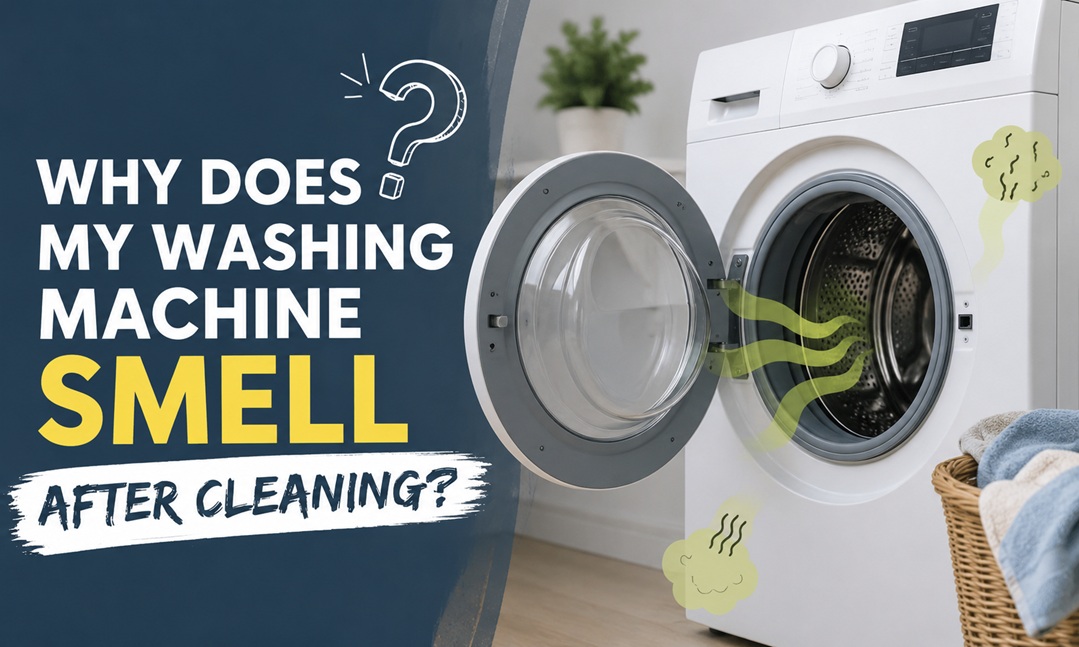
If your washing machine smells after cleaning it, the most likely cause is mould or mildew hiding in places the clean cycle does not actually reach — particularly the rubber door seal, the detergent drawer, or internal drum vents. Residual soap scum and hard water deposits also trap bacteria that produce that sour, musty odour.
Running a cleaning cycle helps, but it is rarely enough on its own.
Myth: Running a Drum Clean Cycle Fixes the Smell
Reality: Drum clean cycles heat the water and spin the drum, but they do not scrub. The rubber door gasket on front-loading machines develops folds that trap water, lint, and detergent residue. Mould grows there undisturbed because the cycle’s water flow barely touches it.
Similarly, the detergent drawer has narrow channels where fabric softener residue hardens over time. That residue goes rancid. A clean cycle does nothing to it.
Myth: Using More Detergent Means Cleaner Clothes
Reality: Overdosing on detergent is one of the main causes of persistent washing machine odour. Excess detergent does not fully dissolve or rinse away. It coats the drum interior, the pump filter, and the hose walls. Over time, this film becomes a food source for bacteria and mould.
Modern high-efficiency (HE) machines are especially sensitive to this. They use very little water and require HE-specific, low-foam detergent. Using regular detergent — or even too much HE detergent — accelerates buildup significantly.
The Real Causes and Where to Look
The door seal (front loaders): Pull back the rubber gasket and look inside. You will almost certainly find dark mould spots, lint, hair, and pooled water. This is the most common source of washing machine smell by a wide margin.
The detergent drawer: Remove it completely if possible and soak it in hot soapy water. Scrub the drawer housing inside the machine with an old toothbrush. The gunk in there is usually significant.
The pump filter: Most front-loading machines have a small access panel at the bottom front. Behind it is a filter that catches lint, coins, and debris. When it is full and wet, it smells strongly. Clean it every three months.
Low-temperature washing: Cold washes do not kill bacteria or dissolve grease and soap residue effectively. Running one hot wash (60°C / 140°F) per week prevents significant buildup.
Practical Steps to Eliminate the Smell
Start with the rubber seal. Wipe it with a cloth dampened with white vinegar or a diluted bleach solution. Get into every fold. Then leave the door open and let it dry completely.
Next, remove and clean the detergent drawer. Run it under hot water and scrub every channel.
Check and clean the pump filter. Keep a towel nearby — there will be water.
Run a hot wash with two cups of white vinegar poured directly into the drum, followed by a second hot wash with half a cup of bicarbonate of soda. This combination breaks down soap scum and kills odour-causing bacteria effectively.
Going forward: always leave the door ajar after washing. Always remove clothes immediately after the cycle finishes. Use the correct amount of HE detergent.
A Note on Top Loaders
Top-loading machines are less prone to the seal issue, but the drum rim and lid seal can still accumulate mould in humid climates. The same approach applies — wipe down regularly, clean the detergent compartment, and run a monthly hot maintenance wash.
If the smell persists after all of the above, the drum bearings or the drain hose may need professional inspection. A blocked drain hose causes water to sit stagnant and that produces a sewage-like smell rather than the typical mildew odour.
